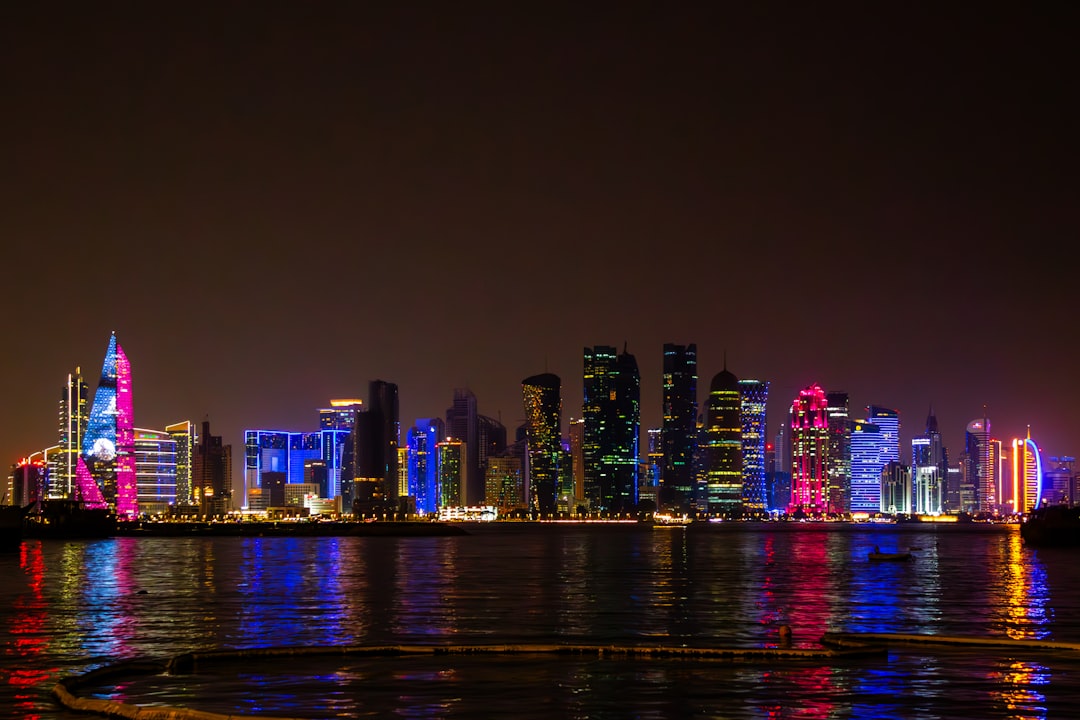
Everyone who moves to Doha hears the same pitch: zero income tax, high salaries, done deal. Then the first Kahramaa bill in August lands, the villa lease renews at a number nobody budgeted for, and the maths gets more complicated. The real cost-of-living picture in Qatar isn't about whether you save money here, most people do. It's about which levers actually move the needle, because a handful of decisions (where you live, how you commute, which school you pick, how you shop) account for most of the swing between a resident who saves aggressively and one who treats a tax-free salary as free money.
Lever 1: housing location
- West Bay and The Pearl: waterfront and high-rise one-bedrooms commonly QAR 6,000 to 9,000; two- and three-bedroom units in premium towers climb past QAR 9,500 to 14,000
- Al Waab and Al Sadd: family-oriented areas, two-bedroom units often around QAR 6,750 to 8,500
- Al Wakrah and Al Khor: budget-conscious one-bedrooms from roughly QAR 4,000 to 5,500
The spread between a Pearl address and an Al Wakrah one is easily QAR 3,000 to 5,000 a month, which dwarfs almost every other saving on this list.
One detail that trips up new arrivals: not all rents include utilities. Older standalone apartments and villas typically bill Kahramaa separately, while some newer compounds bundle electricity and water partly or fully into the rent. Confirm this before signing anything.
Lever 2: transport, car or no car
Doha Metro fares are genuinely cheap: single trips run roughly QAR 2 to 6 by zone, a day pass costs about QAR 10, and Qatar Rail's monthly unlimited pass sits close to QAR 100. Karwa taxis are metered and government-regulated, translating to roughly QAR 12 to 25 for an in-town hop and QAR 40 to 90 for longer crosstown or airport runs.
Compare that to car ownership: petrol prices are centrally set by QatarEnergy/WOQOD, sitting around QAR 1.85 to 2.05 per litre through 2026. Comprehensive car insurance for a typical mid-range vehicle runs roughly QAR 2,000 to 6,000 a year, with third-party-only cover from around QAR 400 to 1,000.
For someone living near a metro line and working near another station, skipping car ownership entirely is a realistic five-figure annual saving.
Lever 3: utilities
Kahramaa is the sole electricity and water supplier. Unlike the tiered subsidised rates Qatari nationals receive, expat residents generally pay a flat, unsubsidised commercial-style rate, commonly cited around QAR 0.32 per kWh for electricity, plus separate water charges. Because Doha's AC load is driven almost entirely by outdoor temperature, a well-insulated newer apartment and a 1980s standalone villa can produce dramatically different July bills for the same square footage. This is a genuine, controllable lever through building choice, not just consumption habits.
The tax picture, more precisely
Qatar has no personal income tax and, as of mid-2026, still no VAT. But "zero tax" is not the whole story:
- A 10% corporate income tax on the Qatar-source income of foreign-owned businesses (35%+ for oil and gas entities)
- A 5% withholding tax on payments like royalties and professional fees to non-residents
- Excise taxes on tobacco (100%), energy drinks (100%) and carbonated beverages (50%), plus a new sugar-tiered rate phased in during 2026
- A standard 5% customs duty on non-GCC imports
Your salary is untaxed, but your cost of living is not tax-free. These indirect costs show up in imported groceries, electronics and services billed through a local company.
Lever 4: school fees
- American School of Doha: roughly QAR 55,000 to 75,000 for lower grades, rising to QAR 100,000 to 115,000 for secondary/IB years, plus a one-time enrolment fee
- Doha English Speaking School (DESS): about QAR 38,000 a year in Year 1, rising to roughly QAR 48,500 to 49,500 a year by Years 7 to 8
- Qatar Academy Doha: roughly QAR 52,000 to 55,000 a year
The spread between DESS-tier and ASD-tier pricing for a single child across a K-12 run is easily QAR 300,000 to 500,000-plus cumulative, making school choice arguably the single largest discretionary cost decision an expat family makes.
Lever 5: groceries (the softest data)
Souq Waqif is primarily a heritage and tourist market, not where residents do a weekly vegetable shop. The actual competitive fresh-produce market is the wholesale vegetable souq on Salwa Road, which anecdotally undercuts hypermarket produce prices. Among hypermarket chains, Family Food Centre and Al Meera are commonly cited as better value than LuLu or Carrefour for a like-for-like basket, though no publication has run a rigorous basket-price comparison. Treat this as a direction, not a hard percentage.
Ranking the levers
Housing location matters most, by a wide margin. School choice is second for families, arguably larger than housing over a multi-year stay. Transport mode is third, mattering enormously if metro access is viable. Utilities come fourth, driven more by building quality than thermostat discipline. Groceries matter least, real but modest next to the others. None of this needs a spreadsheet obsession. It needs three or four decisions made correctly before signing a lease or an enrolment contract, because those are expensive to reverse.